Confirm the device
Ask for the exact Ulthera System model and the applicator planned for each area.
Confirm model
Imaging · Applicator · Area · Risk · Follow-up
confirm model, area and plan.
For people comparing Ultherapy in Bangkok, the official instructions distinguish imaging from treatment delivery and list contraindications and adverse events. A device name alone cannot select settings or establish suitability.
Direct answer
The Ulthera System with PRIME model combines ultrasound imaging with delivery of focused ultrasound that creates discrete thermal coagulation points.
Official indications and clearances are device-, country- and area-specific.
The physician must confirm the exact model, applicator, planned area, anatomy, contraindications, settings context, expected trade-offs, aftercare and review point.
General information only. It is not a diagnosis or a treatment recommendation. Individual suitability and response vary.
Official Ultherapy PRIME instructions for useLine count + quotation
Search demand asks for a number and a price. A safe answer starts with the exact device, treatment area, anatomy and applicator—not an archived package.
Confirm that the planned device is the Ulthera System with PRIME control unit. The FDA record describes a modernised console; it does not turn another HIFU system into the same device.
Record the concern and planned area, then confirm the transducer or applicator and why its treatment depth is being considered for that anatomy.
Disclose wounds, severe or cystic acne, active or metallic implants, pregnancy or breastfeeding, relevant conditions, medicines, fillers and earlier procedures for individual review.
The written plan should name the model, area, applicator, proposed line distribution, what is included, follow-up and the current itemised quotation. More lines are not automatically a better plan.
Process + recovery
The official instructions make imaging, skin contact, line spacing and trained operation part of the process. They do not support a no-risk or no-downtime guarantee.
The clinician reviews the concern, medical history and treatment area, records the agreed plan and explains alternatives, expected trade-offs and consent.
The treatment area is cleansed and ultrasound gel is used so the transducer can maintain appropriate contact with the skin.
Ultrasound imaging is used to check tissue layers, contact and intended depth before treatment lines are delivered with appropriate positioning and spacing.
Redness, swelling, tenderness, bruising or sensory symptoms can occur. Confirm written aftercare and contact the clinic promptly for severe, unusual or worsening symptoms.
Do not transfer claims, images or protocols from Ultraformer MPT Program or legacy Ulthera SPT Program.
Ask for the exact Ulthera System model and the applicator planned for each area.
Confirm modelSeparate skin laxity, tissue position, volume and texture before discussing an energy plan.
Map the areaDiscuss pain, redness, swelling, bruising and the less-common events in the official instructions, plus the escalation route.
Request the safety planPatient review and before-and-after images
This review gallery documents individual patients with before-and-after images and does not predict another person's outcome.
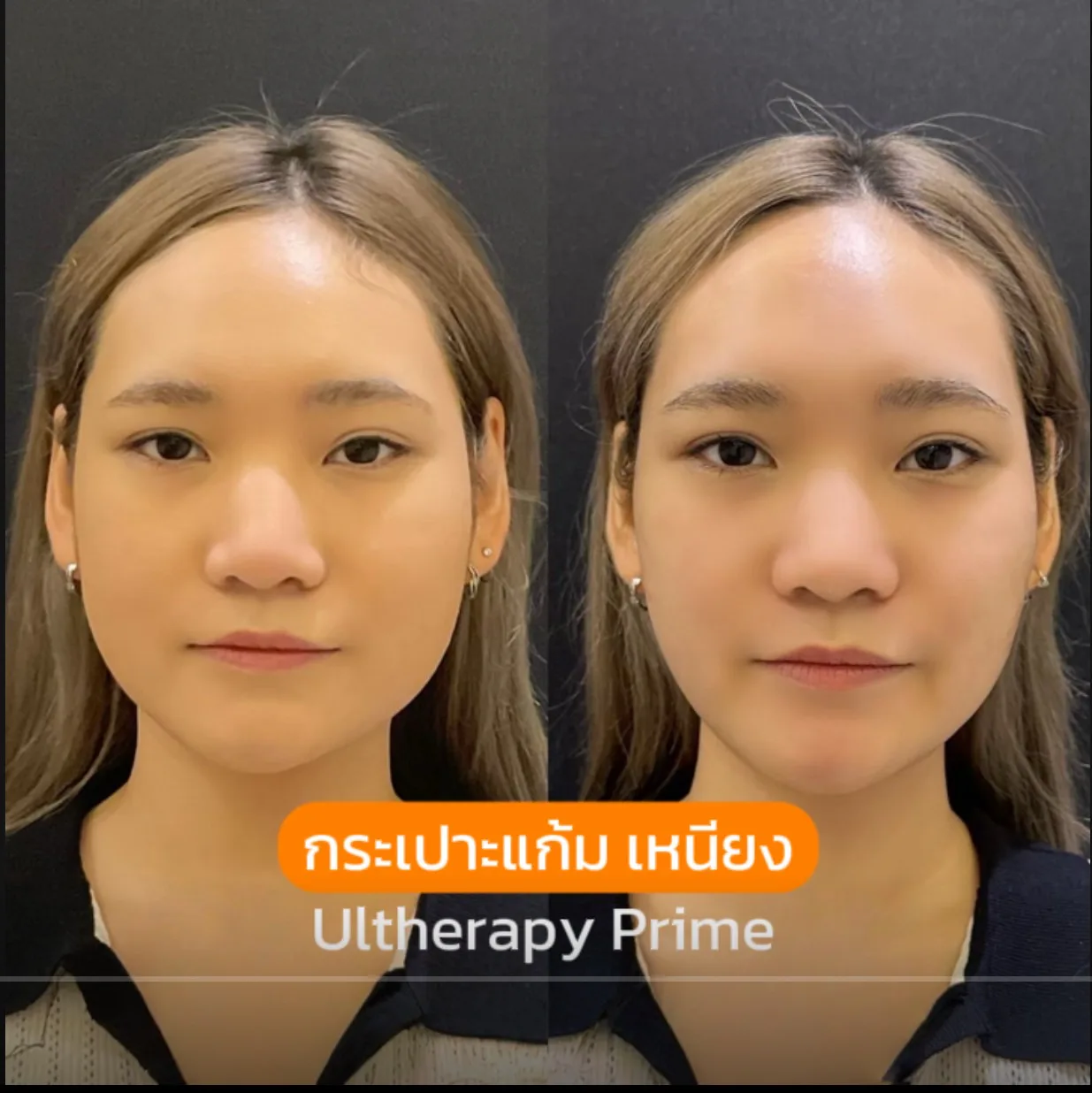
The image identifies the Program, but does not by itself establish the exact product variant, amount, treatment area, technique or complete treatment plan.
Individual results vary. Capture timing, lighting, expression, camera distance and angle may differ as part of real-world clinical photography. A physician consultation is required before treatment.

No. They are different device systems. Confirm the exact model, transducer or applicator, locally applicable use, settings context and evidence separately.
The official instructions describe imaging of dermal and subdermal tissue to check transducer coupling and confirm an appropriate treatment depth, including avoiding bone. Imaging supports planning and delivery; it does not guarantee an outcome.
The official instructions list open wounds or lesions, severe or cystic acne, active electronic implants or metallic implants in the treatment area as contraindications. They also identify populations and conditions that were not evaluated or need precautions. A physician must review pregnancy or breastfeeding, medicines, medical conditions, fillers, implants and earlier procedures before deciding.
No. The official instructions list post-treatment effects and post-market adverse events, including edema, erythema, bruising, pain or burning and less-common complications. Individual risk requires assessment.
There is no safe universal count. The planned area, anatomy, applicator and treatment map must be assessed first. Confirm the final count and current itemised price in the consultation rather than relying on an archived package.
No. The treatment area, anatomy, applicator, coupling, depth, positioning and spacing all matter. The official instructions warn that incorrect technique or inadequate spacing can cause adverse events, so the proposed count must be part of a mapped plan.
There is no universal count. The exact device, area, anatomy, goal, response and review determine whether another treatment is considered.
Ask for the exact device model, planned area, applicator, proposed count and distribution, what is included, physician process, aftercare, follow-up and current itemised price. Do not rely on a historic promotion or another clinic's package.
Use the channel that works best for appointment coordination and general questions.
Messaging is not monitored as an emergency service. Language availability and response times can vary.